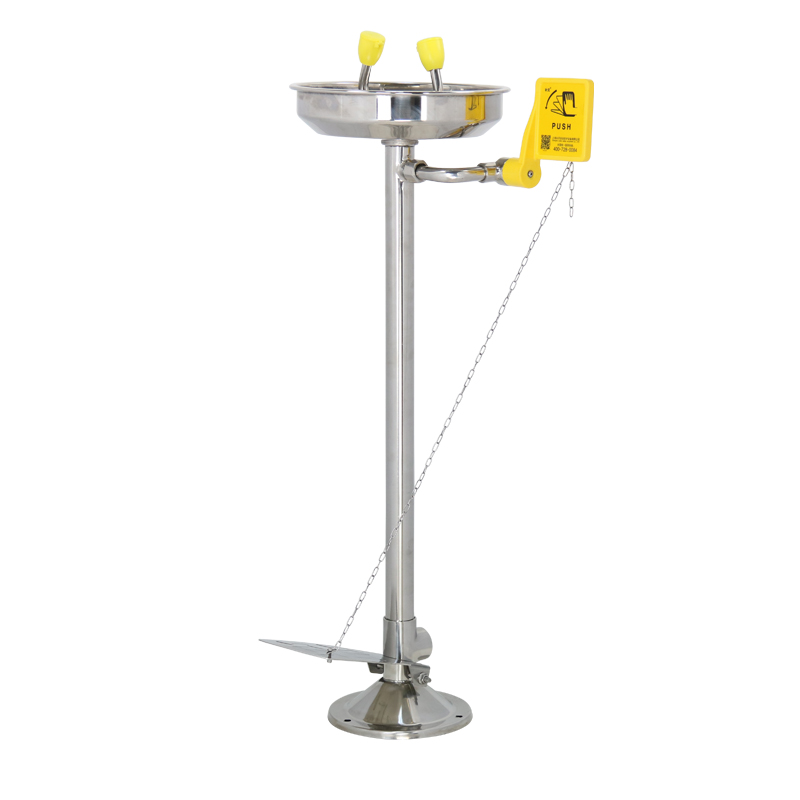
Roundfin BTT11 BTT21 Single/Double-Port Desktop Eye Washer

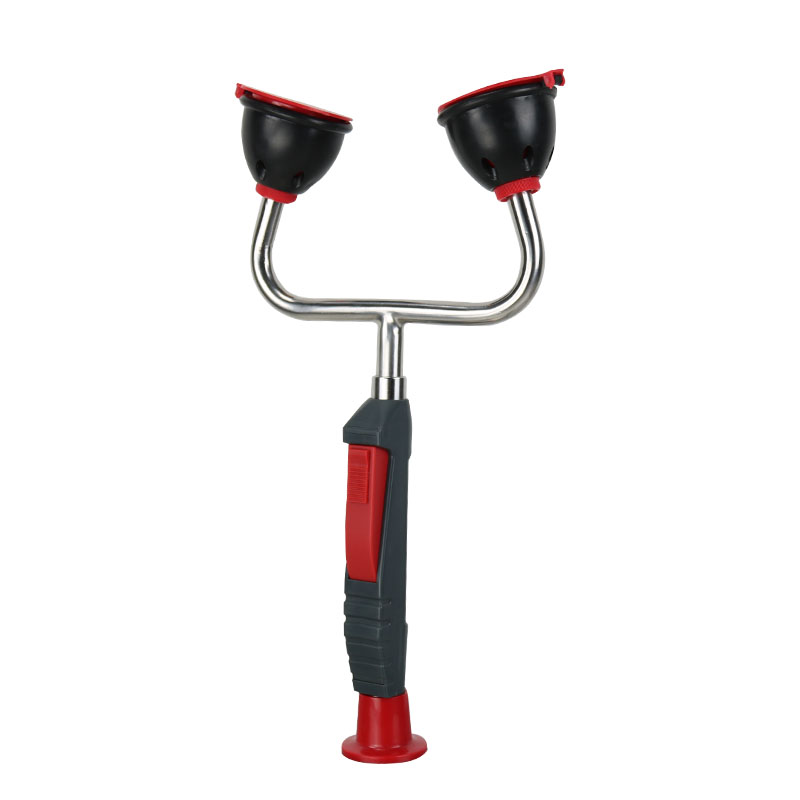
1. Compact desktop/bench-mount design — installs directly on laboratory workbenches, fume hood work surfaces, and educational lab stations where floor space is limited
2. BTT11 single-port and BTT21 dual-port configurations — single eyewash outlet for individual use or dual outlets for simultaneous two-eye irrigation and multi-user capability
3. Brass body with polished chrome-plated finish — corrosion-resistant, easy-clean surface compatible with standard laboratory chemical exposure environments
4. Stay-open squeeze-handle valve — activates with a single squeeze and locks in the open position for continuous hands-free eye irrigation without requiring the user to maintain grip
5. Aerated spray outlet with removable aerator for periodic cleaning and descaling; 360° swivel spray head for adjustable spray angle to accommodate different user heights
6. 1/2-inch NPT female inlet for connection to potable water supply; CE marked and manufactured under ISO 13485 standards; ANSI Z358.1-2014 compliant
Product Overview
The Roundfin BTT11 and BTT21 Desktop Eye Washers are compact bench-mount emergency eyewash stations designed for installation directly on laboratory workbenches, fume hood decks, and educational science stations where floor space is at a premium. The brass body with polished chrome-plated finish provides corrosion resistance in laboratory environments, while the stay-open squeeze-handle valve enables hands-free continuous eye irrigation. The BTT11 offers a single aerated spray outlet, and the BTT21 adds a second outlet for simultaneous two-eye flushing.
Roundfin BTT11 BTT21 Desktop Eye Washer — Bench-Mount Emergency Eyewash
Key Takeaway: Roundfin BTT11/BTT21 Desktop Eye Washer — ANSI Z358.1-2014 compliant emergency eyewash equipment. CE marked, ISO 13485 certified. Available in portable and plumbed configurations for laboratories, industrial facilities, and healthcare environments. Worldwide shipping.
Technical Specifications
| Parameter | Specification |
|---|---|
| Models | BTT11 (single-port); BTT21 (dual-port for simultaneous two-eye irrigation) |
| Body Material | Brass with polished chrome-plated finish; corrosion-resistant |
| Mounting | Desktop/bench-mount with 1/2" NPT female inlet for potable water connection |
| Valve Type | Stay-open squeeze-handle valve; locks in open position for hands-free operation |
| Spray Head | Aerated outlet with removable aerator; 360° swivel for adjustable spray angle |
| Flow Rate | Minimum 1.5 L/min per ANSI Z358.1-2014 at 30-90 psi inlet pressure |
| Inlet Connection | 1/2" NPT female (standard US pipe thread); BSP adapters available |
| Certifications | CE marked; ISO 13485; ANSI Z358.1-2014 compliant |
Key Features
- Space-Saving Desktop Design — Installs directly on the workbench surface where chemical handling occurs; eliminates the floor footprint of a traditional pedestal eyewash and reduces the travel distance from hazard to eyewash to under one second.
- Single or Dual-Port Configuration — BTT11 single spray head for individual eye irrigation; BTT21 dual spray heads for simultaneous two-eye flushing, reducing total irrigation time and providing more effective bilateral chemical decontamination.
- Stay-Open Squeeze Valve — Single squeeze activates the eyewash and locks it in the open position for continuous hands-free flow; user can use both hands to hold eyelids open for thorough eye irrigation without maintaining grip on a valve handle.
- Brass Body with Chrome Finish — Solid brass construction provides durability and corrosion resistance in laboratory environments; polished chrome finish enables easy cleaning and maintains a professional appearance after years of use.
- 360° Swivel Spray Head — Adjustable spray angle accommodates users of different heights — from seated laboratory technicians to standing students; aerated flow provides gentle yet thorough eye irrigation without high-velocity jet injury.
- Removable Aerator for Maintenance — The spray head aerator can be unscrewed for periodic cleaning and descaling, ensuring consistent flow rate and spray pattern over years of service; replacement aerators available from Roundfin.
FAQ
How do I install a desktop eyewash on my laboratory bench?
The BTT11/BTT21 mounts through a 22-25 mm hole drilled in the bench surface. The threaded body passes through the hole and is secured from beneath with the included lock nut and washer. Connect the 1/2" NPT female inlet to your potable water supply line using an appropriate flexible hose or rigid pipe connection. Install a shut-off valve in an accessible location near the eyewash for maintenance isolation. Test for leaks before commissioning. The spray head should be 83.8-114.3 cm (33-45 inches) above the floor per ANSI Z358.1-2014.
What is the difference between the BTT11 single-port and BTT21 dual-port?
The BTT11 has one aerated spray outlet — suitable for individual eye irrigation where the user alternates between eyes. The BTT21 has two spray outlets positioned for simultaneous irrigation of both eyes, which is more effective for bilateral chemical exposure and reduces total flush time. The BTT21 dual-port is recommended for laboratories handling highly corrosive or rapidly damaging chemicals (strong acids, alkalis, oxidizing agents) where every second of exposure increases injury severity.
What water pressure is required for proper operation?
The eyewash requires a minimum inlet pressure of 30 psi (2.1 bar) to achieve the ANSI-mandated 1.5 L/min flow rate at the spray outlet. Maximum inlet pressure is 90 psi (6.2 bar). If your facility water pressure exceeds 90 psi, install a pressure-reducing valve upstream of the eyewash. If pressure is below 30 psi (common in upper floors or remote buildings), a booster pump may be required. The stay-open squeeze valve is designed to operate across this full pressure range without leaking.
How do I test and maintain the desktop eyewash?
Weekly activation test: activate the eyewash for 3-5 seconds to flush stagnant water from the supply line and verify flow rate and spray pattern. Check that the stay-open valve locks in the open position and releases cleanly. Monthly: full 1-minute activation test; inspect the spray head aerator for scale buildup (clean or replace as needed). Annual: disassemble the spray head assembly, descale the aerator, inspect the valve seat for wear, and verify that the 360° swivel mechanism moves freely. Maintain a written weekly test log per OSHA requirements.