Histology Embedding Paraffin Wax | Roundfin

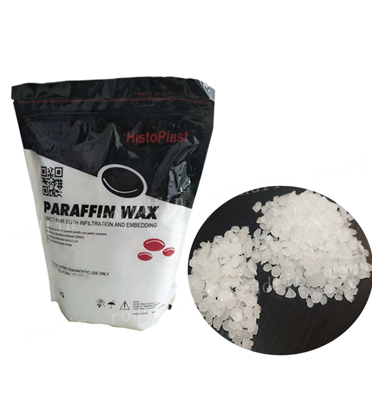
1. High-purity paraffin wax blend with optimized melting point (56-58°C) for consistent tissue infiltration and smooth ribbon sectioning
2. Supplied in convenient pearl or pellet form for rapid melting, easy dispensing, and dust-free handling in the embedding center
3. Controlled polymer additive formulation enhances ribbon formation and reduces section compression during microtome sectioning at 2-5 µm
4. Low paraffin shrinkage upon cooling ensures minimal tissue-tearing and block surface cracking during cold plate solidification
5. Compatible with all standard automated tissue processors (Leica, Thermo, Sakura) and embedding center paraffin reservoirs
6. CE marked and manufactured under ISO 13485 quality standards for clinical histopathology laboratory use
Product Overview
Roundfin Histology Embedding Paraffin Wax is a high-purity paraffin blend formulated with controlled polymer additives for optimal tissue infiltration, embedding, and microtome sectioning. The optimized melting point (56-58°C) ensures thorough liquid paraffin penetration of tissue specimens during automated processing while providing rapid solidification on the cold plate for efficient embedding workflow. Supplied in dust-free pearl form for easy dispensing, melting, and minimal waste in the embedding center.
Histology Embedding Paraffin Wax for Tissue Processing and Embedding
Key Takeaway: Roundfin Embedding Paraffin Wax — Roundfin quality. CE marked, ISO 13485 certified. Bulk pricing and OEM/ODM customization available for institutional procurement. Worldwide shipping.
Technical Specifications
| Parameter | Specification |
|---|---|
| Form | Pearl/pellet form; dust-free for clean handling and rapid melting |
| Shrinkage Rate | Low shrinkage on cooling — minimizes tissue-tearing and block cracking |
| Sectioning Performance | Consistent 2-5 µm sections with good ribbon formation on standard rotary microtomes |
| Certifications | CE marked; ISO 13485; DMF (Drug Master File) registered |
Key Features
- Optimized 56-58°C Melting Point — Standard histology-grade melting point ensures complete liquid infiltration of tissue during processing at 60-65°C while maintaining tissue morphology and antigenicity for downstream IHC and molecular testing.
- Dust-Free Pearl Form — Supplied as small pearls/pellets rather than bulk blocks for rapid, even melting in the embedding center reservoir; dust-free handling minimizes particulate contamination on embedding station surfaces.
- Controlled Polymer Blend — Proprietary polymer additive formulation enhances paraffin ribbon formation during sectioning, reducing the incidence of section compression, chatter, and ribbon separation at standard 2-5 µm thickness.
- Low-Shrinkage Formula — Minimal volume reduction during cooling prevents block surface cracking, tissue-paraffin separation at the interface, and the block-face frosting that indicates incomplete tissue infiltration.
- Universal Processor Compatibility — Formulated for use in all standard automated tissue processors including Leica ASP series, Thermo Excelsior/Citadel, Sakura Tissue-Tek VIP, and manual processing protocols.
- Batch-Traceable Quality — Each production batch is tested for melting point, viscosity, penetration, and sectioning performance on standardized multi-tissue blocks with full QC documentation available for laboratory accreditation.
Applications
- Routine histology and pathology sample-preparation workflows
- Clinical laboratories processing compatible specimens, blocks or slides
- Research and teaching facilities using microscopy and tissue-processing supplies
- Laboratories confirming size, material and equipment compatibility before ordering
Frequently Asked Questions
What is the recommended paraffin infiltration protocol?
For standard automated tissue processors: 2-3 paraffin changes at 60-65°C, each 30-60 minutes depending on tissue size and type. For biopsies (1-2 mm thickness), 2 changes of 30 minutes each. For routine surgical specimens (3-4 mm thickness), 3 changes of 45-60 minutes each. For large or fatty specimens, extend infiltration time or add an additional paraffin change. Incomplete infiltration manifests as tissue-paraffin separation during sectioning or moth-eaten block surfaces.
Can this paraffin be used for IHC and molecular testing?
Yes. The paraffin formulation is compatible with immunohistochemistry (IHC), in situ hybridization (ISH), and PCR-based molecular testing from formalin-fixed paraffin-embedded (FFPE) tissue. The controlled polymer additives do not interfere with antigen retrieval, antibody binding, or nucleic acid amplification. For laboratories performing extensive molecular testing, Roundfin also offers a molecular-grade low-melting-point paraffin (52-54°C) optimized for nucleic acid preservation.
How should the paraffin pearls be stored?
Store in the original sealed container in a cool, dry environment (15-25°C) away from direct sunlight, heat sources, and volatile organic solvents. Avoid storage above 40°C, which may cause the pearls to fuse into a solid mass. Under proper storage conditions, the shelf life is 3 years from the manufacturing date. Keep the container sealed when not in use to prevent dust contamination of the pearl surface.
What is the difference between this and cheaper generic paraffin?
Roundfin embedding paraffin uses a controlled polymer additive blend specifically formulated for histology sectioning. Generic paraffins may have inconsistent melting points, higher shrinkage rates, and lack optimized polymer additives — resulting in poor ribbon formation, increased section compression, and block cracking. Each Roundfin batch is QC-tested on standardized multi-tissue blocks. The dust-free pearl form also reduces embedding center contamination compared to bulk block paraffin that requires manual chipping.
Explore related histopathology consumables or contact Roundfin for configuration, compatibility and quotation details.