Electric vs Hydraulic Mortuary Body Lift: A Practical Buying Guide for Morgue Projects
Electric vs Hydraulic Mortuary Body Lift: A Practical Buying Guide for Morgue Projects
For hospitals, funeral homes, medical schools and public health facilities, safe body handling is a daily operational requirement. A mortuary body lift helps staff move and position bodies with less manual lifting, better control and a more hygienic workflow. When buyers compare equipment, one of the first questions is whether to choose an electric mortuary lift or a manual hydraulic mortuary lift.
Both options can be suitable, but they serve different working conditions. The right choice depends on transfer height, workload, room layout, staff training, budget, charging access and compatibility with refrigerators, autopsy tables and mortuary trolleys. This guide explains the practical differences so procurement teams can specify the right cadaver lift trolley.
Why a Mortuary Body Lift Matters
A mortuary lift is part of the complete body handling route from receiving to storage, autopsy, preparation and release. Without a stable lift, staff may need to manually raise or shift weight between a stretcher, refrigerator tray, autopsy table or transport trolley. That increases strain and can create safety risks.
Professional mortuary lifts are designed to reduce these problems. They usually combine a stainless steel frame, body tray, lifting mechanism, casters and brakes. The lift should move smoothly, align with related equipment and remain easy to clean after each use.
Electric Mortuary Body Lift: Best for Frequent and High-Lift Work
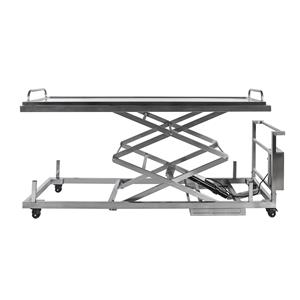
An electric mortuary body lift uses a powered actuator or motorized lifting system to raise and lower the tray. This makes it useful for facilities with frequent transfers, higher storage levels or staff who need more ergonomic operation. Operators can control the lifting movement by button, which helps reduce repeated manual pumping during busy workdays.
For example, the Roundfin RD-1531E electric two scissors mortuary body lift is designed for higher lifting requirements, with a stainless steel structure, button-controlled height adjustment, body tray and brake-equipped wheels. This design is suitable when the lift must match multi-level body storage, autopsy tables or equipment at different working heights.
Electric lifts are often preferred in hospitals, large funeral homes, medical teaching facilities and project tenders where staff safety and repeatable operation are important. They can also improve consistency because the lifting speed and movement are less dependent on operator strength.
Hydraulic Mortuary Lift: Simple, Durable and Cost Practical
A manual hydraulic mortuary lift uses a hydraulic system operated by foot pedal or hand control. It does not depend on battery charging, which can be an advantage in smaller facilities, backup rooms or locations where electrical maintenance support is limited.
The Roundfin RD-1527 manual hydraulic mortuary lift is an example of a practical hydraulic body lifting trolley. It is designed with a stainless steel structure, body tray, adjustable lifting height and caster movement for morgue and funeral home use.
Hydraulic lifts are often selected for lower to medium transfer frequency, budget-sensitive projects or facilities that want a mechanical solution with fewer electrical components. They can still provide safe lifting support when the height range, load capacity and room workflow are matched correctly.
Compare Lifting Height and Equipment Compatibility
The most important specification is not whether the lift is electric or hydraulic. It is whether the lift can align with the equipment in the room. Buyers should check the minimum height, maximum height, tray size and loading direction before confirming an order.
For mortuary refrigerators, the lift should align with the chamber or body tray level so staff can transfer smoothly. For autopsy tables or preparation tables, the lift should match the working height or provide enough adjustment range to reduce bending and manual lifting. If the facility uses multi-tier storage, a higher lift range may be necessary.
In a complete project, buyers should compare the body lift with other mortuary equipment, including refrigerators, trolleys, autopsy tables and stainless steel accessories. Selecting these products together helps avoid height mismatch and layout conflicts after installation.
Check Load Capacity, Stability and Frame Design
Load capacity should be treated as a safety specification. A mortuary body lift must support the body, tray and movement with a stable margin. Buyers should review the rated load, scissor structure, actuator or hydraulic system, wheel size and brake design.
A stable lift should not shake during raising, lowering or movement across the room. The frame should be welded cleanly, and the tray should be strong enough for repeated use. If the lift uses a two-scissor structure, it may provide higher lifting reach, but the buyer should still check stability at upper height.
Casters are also important. Larger wheels can move more smoothly over thresholds and floor joints. Brakes should lock reliably during transfer. In wet cleaning areas, wheel material and bearing quality affect long-term performance.
Hygiene and Stainless Steel Details
Mortuary equipment is used in environments that require frequent cleaning and disinfection. Stainless steel construction is usually preferred because it resists corrosion and cleans more easily than painted or low-grade materials. Buyers should ask about the stainless steel grade, welding quality, surface finish and tray design.
For body lifts, the tray should be easy to remove or clean. Corners should not trap residue, and the surface should support routine disinfection. If the equipment will be used in humid climates or coastal regions, corrosion resistance becomes even more important.
Procurement teams should also ask how the battery box, hydraulic pump, actuator and control components are protected from cleaning water. A clean design reduces maintenance work and supports a more professional morgue workflow.
Battery, Charging and Maintenance Planning
Electric body lifts need charging management. Before choosing an electric model, confirm battery capacity, charging time, expected lifting cycles per charge and whether spare batteries or replacement parts are available. The room should have a safe charging location that does not block the transfer route.
Hydraulic lifts require a different type of maintenance planning. Buyers should ask about the hydraulic system, seals, pump operation and replacement support. A hydraulic unit may be simpler to operate in some facilities, but it still needs routine checks to maintain smooth lifting performance.
For both types, maintenance access matters. Buyers should request clear operation instructions, spare parts information and packing details for export shipment. Reliable after-sales communication is important for overseas distributors and hospital contractors.
Which Option Should You Choose?
Choose an electric mortuary body lift when the facility has frequent transfers, higher lifting requirements, multi-level body storage, or a strong focus on reducing operator effort. Electric models are also suitable for tenders where ergonomic handling and consistent operation are part of the evaluation.
Choose a hydraulic mortuary lift when the project needs a durable, cost-practical solution for standard transfer work, lower daily frequency or locations where simple mechanical operation is preferred. Hydraulic models can be a good fit for smaller funeral homes, clinics and backup mortuary rooms.
If the facility is large or the workflow is complex, the best answer may be a combination. One electric lift can handle high-level storage or heavy daily use, while a hydraulic lift or standard trolley supports secondary transfer tasks.
Procurement Checklist for Mortuary Body Lifts
Before placing an order, prepare a checklist that includes room dimensions, doorway width, refrigerator height, autopsy table height, transfer distance, floor condition, expected workload and staff count. Then compare lift height range, load capacity, tray size, stainless steel grade, caster design, brake system, battery or hydraulic mechanism, packing method and spare parts support.
Buyers should also share drawings or photos of the room with the supplier. This helps confirm whether the lift can turn in the available space and align with storage chambers.
Work With Roundfin for Complete Morgue Equipment Planning
Roundfin supplies mortuary body lifts, refrigerators, autopsy tables, trolleys and stainless steel equipment for hospitals, funeral homes, medical schools and project contractors. Instead of selecting a lift as a single item, buyers can discuss the full workflow with Roundfin so the lifting trolley, storage system and preparation area are matched from the beginning.
For a new morgue project or equipment upgrade, send the expected room layout, transfer height requirements and product list to Roundfin. The team can help compare electric and hydraulic body lift options, confirm practical specifications and support export supply for professional mortuary and pathology equipment projects.