Autopsy Table Buying Guide: Drainage, Cleaning and Installation Checks for Hospital Projects
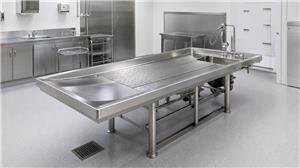
Autopsy Table Buying Guide: Drainage, Cleaning and Installation Checks for Hospital Projects
An autopsy table is one of the most important working surfaces in a hospital morgue, forensic center, anatomy room or medical teaching facility. It must support examination work, protect staff safety, control liquid flow, connect correctly with plumbing, and remain easy to clean after every use. For project buyers, choosing an autopsy table is not only a matter of table size or price. The decision should consider drainage, stainless steel quality, removable panels, height, installation conditions and how the table fits the full mortuary workflow.
This guide is written for hospital procurement teams, funeral home project contractors, pathology departments, medical schools and distributors who need practical equipment specifications before requesting a quotation. It explains the main checks that help buyers compare stainless steel autopsy tables and dissection tables more confidently.
Start With the Work Type and Room Layout
Before comparing models, define how the table will be used. A general hospital morgue may need a practical stainless steel autopsy table for post-mortem examination and washing. A forensic center may require more working space, better drainage and support for instruments. A medical school or anatomy laboratory may need a dissection table that supports long study sessions, removable trays and ergonomic operator access.
Room layout matters just as much as the product itself. Check the door width, drainage point, water inlet, electrical outlet, ventilation position, floor slope and available clearance around the table. Staff must be able to move around the table without blocking body lifts, trolleys or refrigerators. If the room is narrow, a table that looks ideal in a catalog may still create turning or cleaning problems after installation.
Roundfin supplies a range of dissection tables and autopsy tables for hospital morgues, anatomy rooms and mortuary equipment projects. Comparing the product range by workflow helps buyers avoid selecting a model that is technically correct but unsuitable for the actual room.
Check Stainless Steel Grade and Welding Quality
Most professional buyers request stainless steel autopsy tables because they are durable, corrosion resistant and easier to disinfect. However, the phrase "stainless steel" is not enough for a serious project specification. Buyers should ask about material grade, thickness, welding method, surface polishing and exposed corners.
304 stainless steel is commonly used for mortuary and medical stainless steel furniture because it provides a practical balance of hygiene, strength and corrosion resistance. For humid regions, coastal locations or rooms with frequent chemical cleaning, material quality becomes even more important.
Welding is another key detail. Poor welds can trap residue, become difficult to clean and weaken the frame over time. A good table should have smooth exposed welds, polished joints and a structure that can handle repeated daily cleaning. For hospital tenders, include stainless steel grade and finish requirements in the purchasing document instead of leaving them as assumptions.
Drainage Design Is a Core Safety Feature
Drainage is one of the most important differences between a basic metal table and a professional autopsy table. During use, the working surface must control liquid and direct it toward the sink or drain instead of allowing overflow to the floor. A concave tabletop, sloped surface, sink connection and drain pipe design all help maintain a cleaner working environment.
For example, the Roundfin RD-1009 autopsy table is designed with full 304 stainless steel construction, a concave anatomy table surface, removable punching tops, a sink and a cleaning system. Its drainage concept is useful for buyers who need a hygienic working platform with controlled liquid flow and easier sanitation.
Before confirming an order, ask where the drain outlet is located, what pipe connection is required, whether the tabletop is sloped, and how the table connects to the room sewer line. Project teams should share plumbing drawings with the supplier early. If the floor drain or wall outlet is in the wrong place, installation may require additional site work.
Removable Panels and Cleaning Access
Autopsy and dissection work requires frequent cleaning. Removable panels, perforated tops and accessible under-table surfaces make that work faster and more reliable. If panels cannot be removed, staff may find it difficult to clean below the working surface or around the sink area.
Ask whether the operating tray is removable, how many sections it has, and whether staff can lift or replace panels easily. Check if the table includes a spray hose, faucet, high-pressure cleaning nozzle or other washing accessories. The goal is not to add features for appearance; the goal is to reduce sanitation time and prevent hidden residue.
Cleaning access also affects maintenance. Casters, drain pipes, faucets, valves and lower frames should be reachable for inspection. In a busy hospital morgue or teaching lab, equipment that is easy to clean will usually perform better over time than a table with a complicated structure and hard-to-reach corners.
Fixed, Liftable or Rotatable Table Design
Autopsy tables and dissection tables are available in several structures. A fixed-height table may be suitable for standard morgue rooms where the working height and workflow are stable. A liftable table can improve ergonomics when different operators use the equipment or when the table must match other devices. A rotatable table may help in anatomy teaching, forensic observation or facilities where access from different sides is important.
The Roundfin RD-A-01 rotatable and liftable autopsy table is an example of a more advanced structure. It uses stainless steel construction, adjustable height, removable operating trays and a table surface that can rotate. This type of design is relevant when buyers need more flexibility than a basic fixed table can provide.
However, more functions also mean more specifications to confirm. Check the height range, rotation angle, locking method, base stability, electrical connection, load capacity and maintenance access. The table must remain stable at working height and should not create shaking during use.
Match the Table With Body Handling Equipment
An autopsy table should not be selected in isolation. It must work with body transfer trolleys, mortuary refrigerators, body lifts and preparation room furniture. The most important compatibility point is transfer height. If the table height does not match the trolley or lift, staff may need unnecessary manual handling.
Check the expected transfer route: receiving area to refrigerator, refrigerator to body lift, lift to autopsy table, then table to cleaning or release area. The table should leave enough clearance for the trolley to approach, for staff to stand safely, and for cleaning equipment to move around the room.
For projects that include multiple pieces of mortuary equipment, share the full product list with the supplier. Roundfin can help buyers compare autopsy tables with body lifts, trolleys, mortuary refrigerators and stainless steel work furniture so the equipment supports one continuous workflow.
Consider Simple Tables for Practical Budgets
Not every project requires a liftable or rotatable table. Smaller hospitals, funeral homes, clinics and budget-sensitive facilities may need a simpler stainless steel autopsy table with reliable material, drainage and cleaning access. In these cases, a practical design can be more suitable than an advanced model with features that the staff will rarely use.
The Roundfin RD-1517 simple autopsy table is a relevant reference for buyers comparing standard stainless steel construction, a cleaning hole, removable tap and export packaging. A simple table can still be professional if the stainless steel grade, load capacity, surface finish and drainage details are specified correctly.
The best choice depends on actual use. A medical school may value adjustable height and removable panels. A funeral home may prefer easy cleaning and practical cost. A forensic center may need more drainage control and accessory support. Matching features to daily work is more important than choosing the most complex model.
Procurement Checklist for Autopsy Tables
Before placing an order, prepare a checklist that includes room dimensions, door width, drain location, water inlet, power supply, ventilation, expected work type, operator count and transfer route. Then compare table size, stainless steel grade, tabletop design, drainage direction, sink structure, removable panels, faucet or spray hose, load capacity, height range, rotation function, casters or base design and packing method.
For international procurement, also ask for product photos, drawings, manuals, lead time, plywood case or export packing details, spare parts support and documentation required for customs or tender files. Heavy stainless steel equipment must be packed carefully to avoid damage during sea freight and inland handling.
Work With Roundfin for Morgue and Anatomy Room Projects
Roundfin supplies autopsy tables, dissection tables, mortuary refrigerators, body lifts, cadaver trolleys, pathology grossing tables and medical stainless steel furniture for hospitals, funeral homes, medical schools and project contractors. Buyers can send room drawings, plumbing positions, desired table functions and related equipment requirements for practical model selection.
If you are planning a hospital morgue, forensic examination room, anatomy teaching room or funeral home preparation area, contact Roundfin with the project layout and expected workflow. Our team can help compare fixed, liftable and rotatable autopsy table options, confirm drainage and cleaning requirements, and support export supply for professional mortuary and pathology equipment projects.